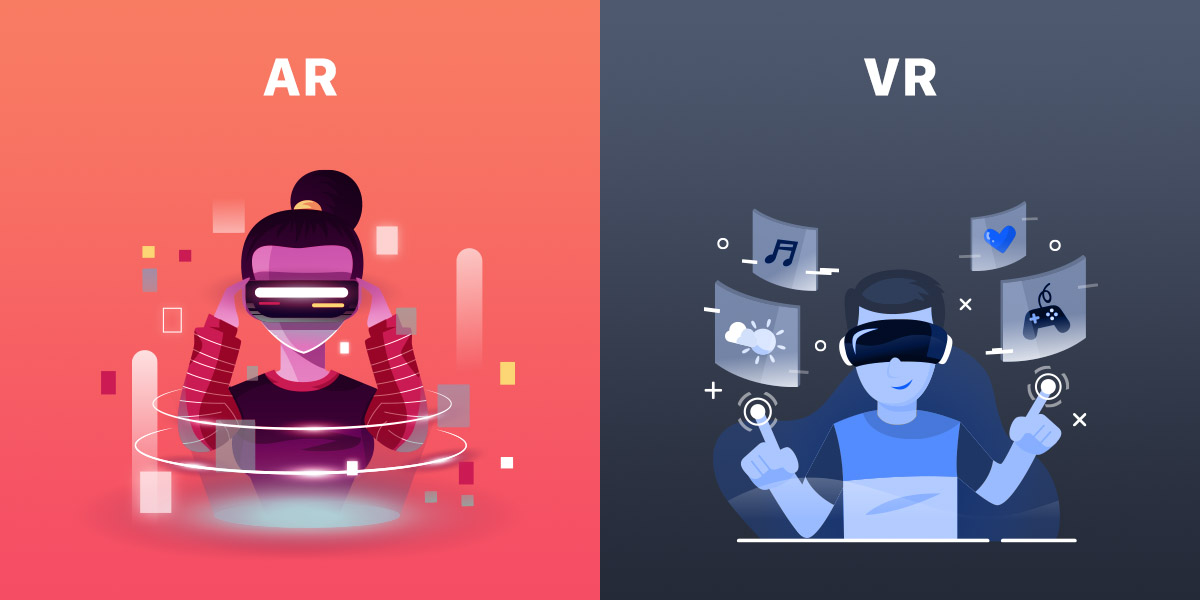
Technology isn’t just about efficiency—it’s about creating experiences. Augmented reality (AR) and virtual reality (VR) are changing the way we learn, work, shop, and play, offering immersive interactions that were unimaginable a decade ago.
This guide explores AR, VR, mixed reality (MR), applications, benefits, challenges, and future trends shaping our digital world.
Understanding Immersive Technology
What is AR and VR?
- Augmented Reality (AR): Overlays digital elements on the real world. Example: Pokémon GO or AR shopping apps.
- Virtual Reality (VR): Fully immersive digital environments accessed via headsets, providing 360-degree experiences.
Mixed Reality (MR)
Combines AR and VR, allowing users to interact with digital objects integrated into the real world.
AR in Daily Life
Retail and Shopping
AR allows virtual try-ons for clothes, furniture, and accessories, enhancing online shopping confidence.
Navigation
AR overlays directions in real-world environments through smartphones or smart glasses.
Education
AR brings textbooks to life with interactive 3D models, improving engagement and understanding.
Healthcare
AR assists in surgery planning, anatomy visualization, and medical training.
VR in Entertainment and Beyond
Gaming
VR creates immersive gaming worlds with interactive environments and realistic experiences.
Virtual Travel
Explore faraway places virtually, making travel accessible to everyone.
Education and Training
VR simulations allow students and professionals to practice skills in safe, controlled environments, such as flight simulators or medical procedures.
Social Interaction
Virtual worlds enable remote collaboration, meetings, and social networking in immersive spaces.
Applications in Business and Industry
Virtual Collaboration
VR and AR support remote work, enabling virtual meetings, team training, and collaborative projects.
Product Design and Prototyping
Designers visualize prototypes in 3D before production, reducing costs and errors.
Marketing and Advertising
Immersive experiences capture audience attention more effectively than traditional media.
Industrial Training
AR guides workers through complex tasks, enhancing safety and efficiency.
Healthcare and Immersive Technology
Surgical Training
VR simulations allow surgeons to practice procedures without risk.
Patient Therapy
VR is used in pain management, rehabilitation, and mental health therapy.
Remote Consultations
AR tools assist doctors in guiding remote procedures or visualizing patient anatomy.
Education and Learning Applications
Interactive Classrooms
AR and VR create engaging lessons with hands-on virtual experiments.
Skill Development
VR simulations enhance technical skills in medicine, engineering, aviation, and more.
Language Learning
Immersive environments help learners practice conversations and cultural immersion virtually.
Benefits of AR and VR
- Enhanced engagement and learning
- Safe environment for practice and experimentation
- Better visualization for design and planning
- Increased customer and user satisfaction
- Opportunities for remote collaboration
Challenges in Immersive Technology
High Costs
VR/AR headsets and development tools can be expensive.
Technical Limitations
High-quality graphics, processing power, and bandwidth requirements are challenges.
Motion Sickness and Fatigue
Extended VR use may cause discomfort for some users.
Content Creation
Developing high-quality immersive experiences requires specialized skills.
Future Trends in Immersive Tech
AR Glasses and Wearables
Lightweight AR glasses may replace smartphones for navigation, shopping, and work.
Virtual Workspaces
Companies will adopt VR for remote meetings, collaboration, and training.
Immersive Social Media
Social platforms may offer virtual worlds for interaction beyond text and video.
Integration with AI
AI-powered avatars and environments will create more interactive, responsive, and personalized experiences.
Education and Professional Training
Widespread adoption in schools, universities, and industries for immersive learning experiences.
Practical Tips for Businesses and Individuals
- Experiment Early: Test AR/VR in small-scale projects or personal use.
- Focus on Value: Use immersive tech to solve real problems, not just for novelty.
- Invest in Training: Educate employees or users to maximize the benefits.
- Stay Updated: Technology evolves rapidly; keep up with software and hardware innovations.
- Combine with Other Technologies: Integrate AI, IoT, and data analytics for smarter immersive solutions.
Conclusion: Immersive Tech is Changing How We Experience the World
AR, VR, and immersive technology are redefining interaction, learning, work, and entertainment. By combining creativity, technology, and practical applications, businesses and individuals can unlock new possibilities, enhance engagement, and improve outcomes.
The future is immersive—those who adapt early will shape the way we experience reality.
FAQs
1. What’s the difference between AR and VR?
AR overlays digital elements onto the real world, while VR creates a fully immersive virtual environment.
2. Can AR/VR be used for education?
Absolutely. Immersive technology enhances engagement, understanding, and hands-on learning across subjects.
3. Are immersive technologies expensive?
High-quality setups can be costly, but costs are decreasing, and software solutions are increasingly accessible.
4. How can businesses use AR/VR effectively?
Use immersive tech to solve real problems, improve customer experience, enhance training, and optimize design processes.
5. What is the future of immersive experiences?
Integration with AI, wearable devices, virtual collaboration, and education will make immersive technology mainstream.